
Scandals, parliamentary defeats and the resignation of Prime Minister Ishiba: a troubled era for the Liberal Democratic Party
For nearly seven decades, the Liberal Democratic Party, or LDP, has been a defining feature of the Japanese political landscape. Since the party’s creation in 1955, a vast majority of prime ministers have come from its ranks. In contrast with the LDP’s enduring monopoly, opposition has long been fragmented and unable to produce a durable, credible and defined political alternative.
In more recent years, however, the once unshakable LDP has been subject to intense scrutiny and reputational blows. Public trust has eroded under the weight of allegations of scandal and corruption. The assassination of Japan’s longest-serving prime minister, Shinzo Abe, in 2022, proved to be the main catalyst in shining light on the LDP’s dubious practices. The killer, driven by his resentment against the Unification Church, a South Korean religious group, unleashed a mediatic and political crisis that revealed the widespread membership amongst LDP ranks. Subsequent enquiries showed that nearly half of all LDP lawmakers had ties to the Unification Church, with some of them even actively participating at the grouping’s functions. The revelations caused growing public discontent and compelled prime minister Fumio Kishida to make a public apology and launch a government investigation into the ties between the group and the party.
Despite Kishida’s attempt at restoring transparency, his administration soon became engulfed in another large-scale financial scandal. Reports of underreported political funds and bribery within LDP political factions sent the prime minister’s approval ratings tumbling down and, ultimately, the so-called “slush fund scandal” led to Kishida’s resignation in August 2024.
Throughout this period, voters’ frustration over the government’s failure to contain surging inflation and living costs accompanied the scandal-induced incremental erosion of political legitimacy. Prices for everyday staples, such as rice, have skyrocketed within a few years, and surveys from mid-2025 highlight that inflation had become the Japanese electorate’s primary concern.
The convergence of these factors set the stage for the LDP’s defeat in the 2024 and 2025 parliamentary elections. The inability for the LDP and its coalition partner since 1999, the Komeito, to secure a majority in the Lower and Upper House. This double-loss is groundbreaking, as the LDP had last failed to maintain a majority of the Lower House in 2009, and it had never been defeated in the Upper House since the party’s inception. Voters clearly communicated a deep-seated dissatisfaction with the leading party, but also a demand for concrete structural political change.

This loosening grasp on voter confidence pushed prime minister Ishiba to resign on the 7th of September, raising questions about the party’s future direction.
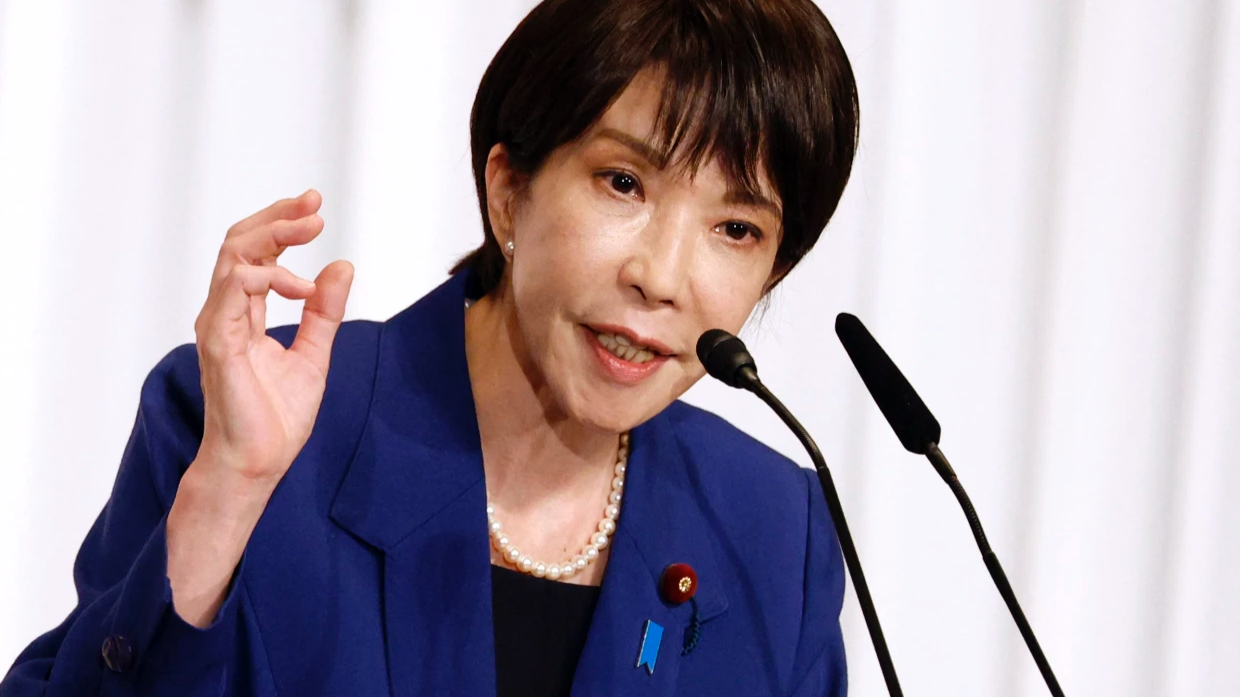
Sanae Takaichi: game-changer politician or relic of the LDP’s golden age?
Ishiba’s resignation triggered a leadership election among LDP lawmakers on the 4th of October that resulted in the victory of Sanae Takaichi. While her appointment as the country’s first female prime minister might appear to signal progress towards gender equality, Takaichi’s political orientation points to an increasingly conservative trajectory.
Takaichi has long been one of the party’s most hawkish politicians, with a particularly hostile stance on immigration and women’s rights. As Abe’s more conservative protégée, she has been vocal in embellishing Japan’s history. She has denied that Korean women were forced into sexual servitude as “comfort women” during World War II and repeatedly visited Yasukuni Shrine, a shrine dedicated to all of Japan’s war dead, including war criminals. Alongside Abe, she has also advocated for revising Article 9 of the Constitution, which renounces Japan’s right to war, to clarify the country’s right for “collective defense” and allow for extended military activities. These positions have led to tensions with China and South Korea, both of which suffered under Japan’s imperialism.
A large proportion of Takaichi’s policies mirror Abe’s manifesto, suggesting ideological continuity more than innovation. The novelty in her approach stems from her electoral strategy. Following Takaichi’s election, the Komeito left the long-established coalition, prompting Takaichi to appeal to more conservative voters. On the 20th of October, she signed a coalition agreement with the Japan Innovation Party, a populist right-wing party that embraces her hawkish vision. Her rise coincides with the empowerment of the Sanseito, a far-right party that has leveraged disinformation and anti-immigrant rhetoric to attract disaffected voters. The party has managed to gain fifteen seats in the Upper House in 2025, a dramatic increase from the one seat it held since 2021. This success story illustrates Japan’s shifting political dynamics and the growing appeal of populist nationalism.
Against this backdrop, Takaichi seems intent on embracing her right-wing base. Her approach could have far-reaching implications for Japan’s diplomacy and security posture.
Foreign policy ramifications under Takaichi’s premiership
Although Takaichi’s agenda seems to emphasise domestic politics, her leadership will have important consequences for the East Asian region.
Takaichi’s foreign policy posture has long been marked by a prominent anti-China stance. Specific positions related to China have long been a core element of Japanese politics, but divergences of opinions have not altered the reality that the PRC remains an economic lifeline for Japan. Takaichi’s premiership alone is unlikely to change this dynamic. Several factors, however, are poised to affect the bilateral relationship. Like her mentor, Takaichi advocates strengthening a multifaceted alliance between Japan and the United States. As President Trump has already used tariffs as a punitive measure for countries that he perceived as insufficiently committed to the bilateral relationship, Tokyo may be increasingly pressured to pick a side in the US-China competition. On the security side, Takaichi has openly embraced the Free and Open Indo-Pacific line, making her likely to ramp up Japan’s involvement in the QUAD and AUKUS along with US support. As Japan becomes more active in countering China’s, it is unsure what policies Beijing will pursue, and how they may compromise Japan’s defence and economic security.
Relations with South Korea may prove even more fragile. While Ishiba achieved some rapprochement with South Korea through an active bilateral diplomacy, Takaichi’s hard-line rhetoric risks undoing that progress. A deterioration in bilateral relations would directly go against Japan’s national interest, as it could compromise the nation’s physical security. Intensifying strife between the two East Asian nations would weaken trilateral security coordination in countering the North Korean threat.
Takaichi’s alignment with the United States could also expose Japan to risk. The American administration has showcased a detachment from the region and a lack of long-term strategic consistency. Overreliance on a singular, unpredictable ally while simultaneously alienating regional powers could leave Japan in a more precarious position, just as China, Russia and North Korea intensify their collaboration. Paradoxically, by potentially pursuing constitutional reform and some fort of military buildup to enhance Japan’s autonomy, Takaichi may increase its geopolitical vulnerability.
It remains too early to determine the path Takaichi will embark on. She has signaled openness to dialogue and coordination, describing South Korea as a “vital partner” shortly after her election. An engagement policy would prove particularly easy in the case of South Korea, as both countries share similar demographic concerns and security threats from North Korea. It is likely that Washington would also encourage cooperation between the two nations. Yet, Takaichi’s electoral strategy to appeal to more right-wing voters may constrain her ability to sustain a more conciliatory foreign policy.
Whether Sanae Takaichi can become a transformative leader will hinge on her ability to balance ideology with pragmatism. In navigating shifting geopolitical dynamics and regional rivalries, her leadership will determine not only the future of the LDP, but Japan’s broader role in East Asia.

Opinion pieces do not reflect the organisational or editoral position of CISES
Photo credits: FRANCK ROBICHON / AFP – Getty Images
Leave a Reply