
Executive Summary
The term “soft underbelly” has been used to describe the Soviet Union and, more recently, Russia’s potential weaknesses on its southern flank. This region is wracked by economic and geopolitical insecurity arising from local rivalries, active jihadist groups and geostrategic competition. However, as Russia, China and Iran continue to integrate with one another, the area is becoming a zone of considerable opportunity. The Caucasus and Central Asia is one of the key corridors for China’s Belt and Road Initiative.Russia, in pivoting its oil exports east, needs pipelines crossing the region. Moreover, it is one of the avenues through which Iran might obtain sanctioned materials such as microchips or high end military equipment to replace losses from the 12 Day War, as well as routes that could enable the sale of sanctioned oil to world markets, thereby diversifying away from its primary customer, China.
Daniel Markey, in China’s Western Horizon, argues that where China has interests in Eurasia the principal theatres in which the West should pursue containment are South Asia and the Middle East. On that basis, the West would not devote large resources to Central Asia. While there is merit in this argument, it also overlooks another avenue of engagement. One key theory for understanding great power competition is Mackinder’s Eurasian theory. Mackinder argued that, following the opening of the Trans Siberian Railway in 1904, Europe and Asia would become connected in new ways. As Eurasia contains the largest share of people and resources, the so-called “World Island” is central to any strategy for global dominance. Mackinder then divided the Eurasian continent into the Heartland and the Rimland (as shown on the map below).

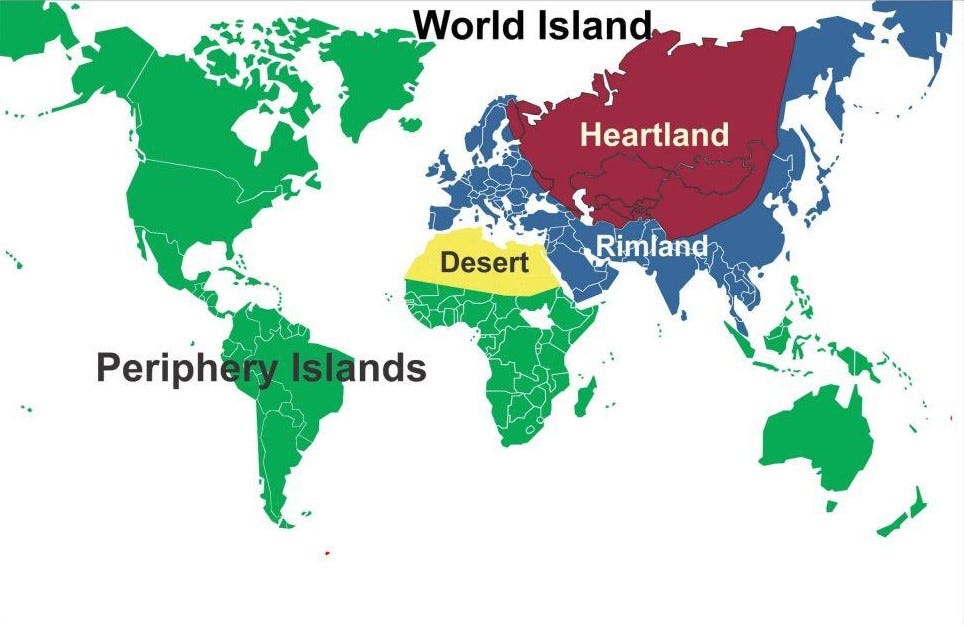
He argued that control of the world requires control of the Heartland, and that to control the Heartland one must control the Rimland. Hal Brands, in The Eurasian Century, documents 20th century history through the lens of Mackinder’s theory. He argues that both the Second World War and the Cold War can be seen through this prism: land powers such as Nazi Germany, the Soviet Union and Communist China were opposed by primarily sea powers such as the United States and the United Kingdom, which competed for primacy over the Rimland. Mackinder’s ideas also inspired diverse strategies, from Nazi Germany’s pursuit of Lebensraum, to the US containment policy during the Cold War, and to modern Russian Eurasianism.
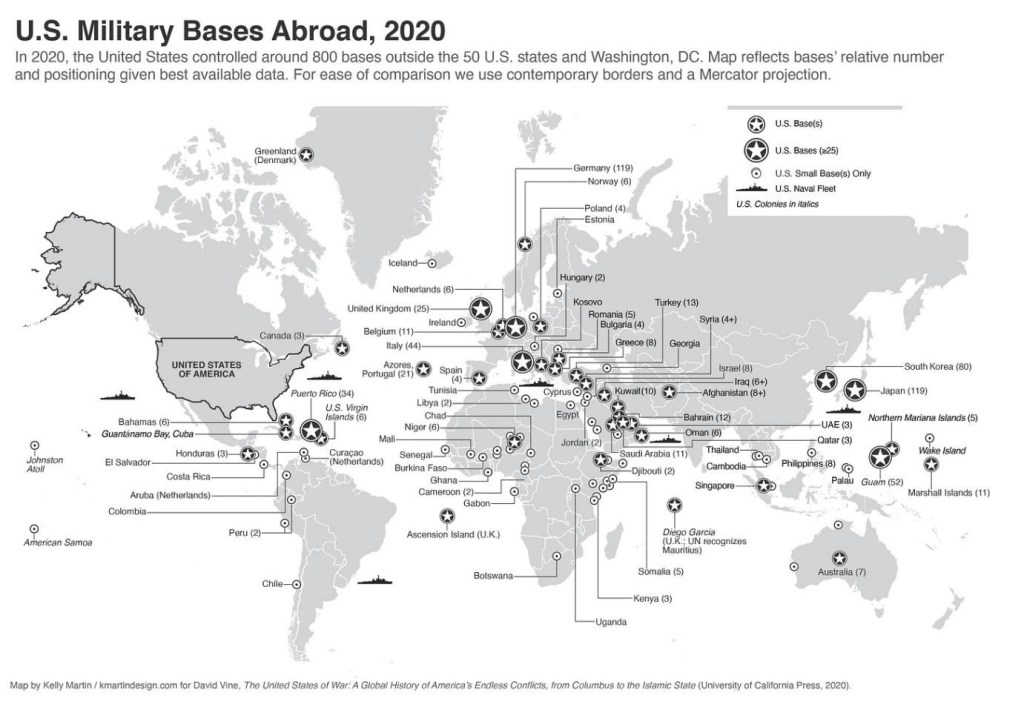
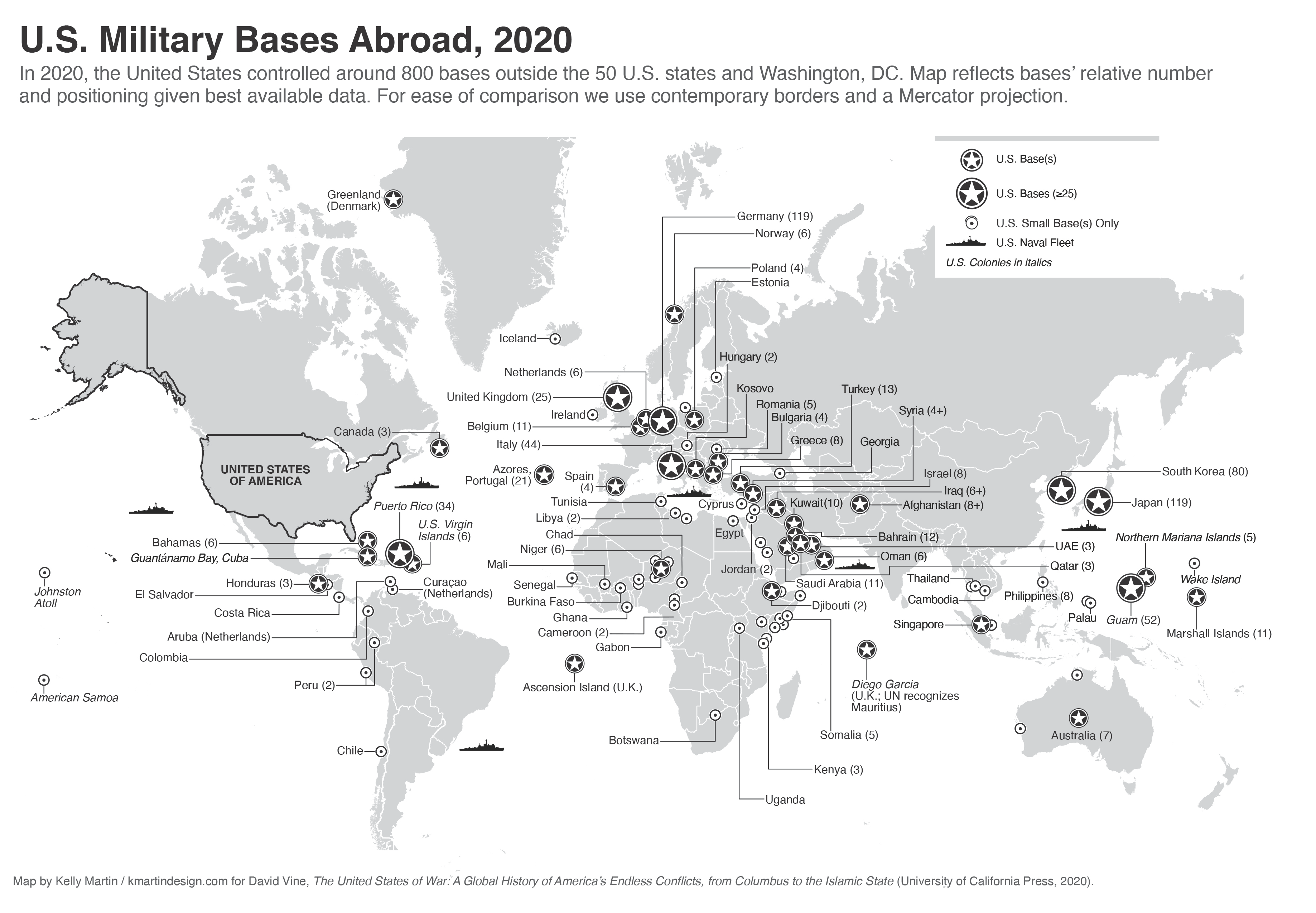
Accordingly, the primary interests for the US and its allies remain in the Rimland region. The vast majority of US allies, from Europe and the Gulf states to Israel, India, South Korea, Taiwan and Japan, lie in or around the Rimland. As the map below illustrates, most US overseas bases operate in this region or in areas that can project power into the Rimland, such as North Africa and the Horn of Africa.
David Kilcullen, in Out of the Mountains: The Coming Age of the Urban Guerrilla, argues that insurgency is increasingly an urban littoral phenomenon. Urbanisation in the Global South is expanding, and standoff distances are changing as states gain the ability to project power from sea to land. Improved military helicopters and VTOL aircraft allow the delivery of troops further inland from aircraft carriers. Likewise, airstrikes and cruise missiles can now be launched from sea to strike inland targets. At the other end, the growing sophistication of anti-ship missiles and drones increases the ability to strike maritime targets from land, as seen with the Houthis in Yemen. While Kilcullen focuses primarily on insurgency, this dynamic applies across the board, including organised crime, terrorism, insurgency and small to medium scale conventional conflicts, all of which create conduits for competition between great powers and render the Rimland more strategically potent today.
That said, I do not think Central Asia and the Caucasus are the West’s primary interest. Nevertheless, they must be considered in any Western grand strategy. The collapse of the Soviet Union has opened avenues of engagement that were unavailable during the Cold War because these areas have been Soviet republics. If we compare the global arena of great power competition to a battlefield, the Rimland should be regarded as the front line. Yet there remain important strategic moves behind the lines that can make the fight at the front more difficult for an adversary. The West should view Central Asia and the Caucasus much as Russia, China and Iran view Africa and Latin America: not always essential to the global game, but capable of providing conduits for destabilisation that distract the United States and Europe. The Cuban Missile Crisis is the obvious historical example, but today there is a range of activities by these actors in those regions that go beyond sanctions evasion.
Latin America’s drug trade has become an important conduit for competition. There is evidence that China has tolerated fentanyl precursors produced by Chinese companies that are sent to cartels in Mexico. Although there is no conclusive proof that Chinese intelligence directs this flow, persistent allegations exist. As Daniel Byman points out in his paper on how states exploit jihadist foreign fighters, inaction against a group engaged in illicit activities often comes down to a state’s capacity to police such actions. China could stop these flows if it wished; toleration therefore is likely a source of strategic advantage.
Iran also has a footprint in Latin America’s illicit economies. Hezbollah has embedded itself in the tri-border area of Brazil, Argentina and Paraguay, leveraging diaspora communities and links with local organised crime to engage in drug smuggling. While primarily a revenue generating activity, this also functions as a tool of destabilisation. The US is the primary market for these drugs, but Europe has been affected too. For example, in September 2023 a raid by the Irish Army Ranger Wing on the Panamanian flagged cargo ship MV Matthew which was bound from the Caribbean uncovered Ireland’s largest ever drug seizure. Subsequent investigations implicated both Hezbollah and the IRGC in the smuggling operation.
Similar dynamics are visible in North Africa. A nexus has developed in Libya between organised crime, Khalifa Haftar’s Libyan National Army and Russian actors. These ties permit the weaponisation of migrant flows across the Mediterranean, a tactic we have seen elsewhere, including on Russia’s border with Norway and Belarus’s border with Poland. Such pressures force European states to reallocate resources from defence to policing irregular migration and can create domestic political instability.
While weaponising criminal markets is morally and strategically fraught, and I would not endorse, for example, weaponising Afghan heroin flows, there are lessons to be learned from these strategies. Rumours circulate about an upcoming US national security white paper that, if accurate, suggest a pivot away from classic great power competition toward a spheres of influence approach resembling a modernised Monroe Doctrine focused on threats in the Americas. If Washington emphasises domestic and hemispheric security, China and Iran may find greater scope to exacerbate problems in the region; Russia can also assist by propping up states such as Venezuela and Cuba. The effect is to distract the US and its allies from broader geostrategic competition. European populist parties have also sought to downplay the Russian threat in favour of prioritising migrant crises showing how Russian weaponization of migrant flows distracts from competition.
In response, the West needs to leverage soft power, diplomacy, irregular warfare, covert action and information tools in the Heartland to engage in spoiling operations and to cleave states away from Russian and Chinese influence. In other areas, the West should act as a spoiler to increased integration between adversaries, making such integration more costly and less attractive.
The Caucuses

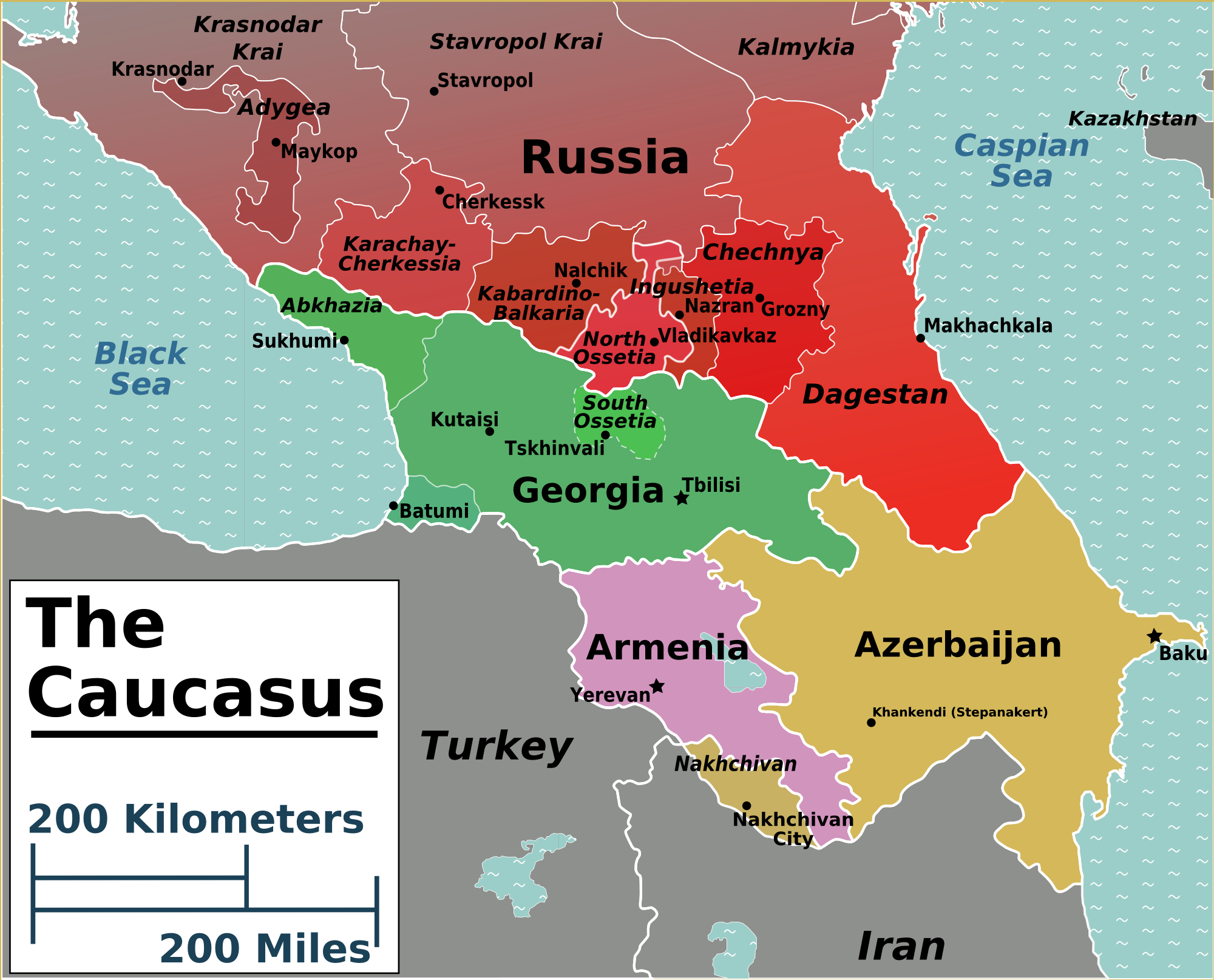
The last number of months have seen a marked expansion of Western influence in the Caucasus, which makes this area, unlike Central Asia, a place where the West has the opportunity to gain the upper hand. At a regional level, the recent US-brokered peace agreement between Armenia and Azerbaijan and, at a global level, the regime change that has taken place in Syria open up new opportunities in the region. The legacy of the Nagorno-Karabakh conflict and the war in Syria creates new ways to reset the relationship with Turkey after a difficult decade between Turkey and its NATO allies. While the relationship between the EU and Georgia is currently rocky, it is one that should be more thoroughly engaged with by both sides, because there are substantial strategic opportunities in the region.
Before moving on to regional dynamics and recent developments, it is first important to examine the relationship between the West and Turkey, before circling back to the Caucasus. Turkey’s geography and history present it with an interesting set of dilemmas for its foreign policy. Like Russia, its close proximity to Europe while simultaneously sitting on the periphery produces contradictions: it is both Western and Eastern, yet neither entirely Western nor entirely Eastern. The legacy of the break-up of the Ottoman Empire and the move towards a more democratic footing under Mustafa Kemal Atatürk led Turkey toward the West; it became a founding member of NATO given its strategic position controlling the Bosphorus. Throughout the Cold War Turkey remained firmly embedded in the Western camp, despite tensions with Greece and domestic instability.
In the 2000s, Turkey sought to join the EU, but democratic backsliding under Recep Tayyip Erdoğan and the 2015 migrant crisis made accession increasingly unlikely. As a result, Turkey began to turn east. There were manoeuvres in formerly the post-Ottoman territories, including its proxy and kinetic engagement in Syria and Libya. For our purposes, one of the key moves Turkey made has been adopting a pan-Turkic approach: it has sought to deepen ties with a number of post-Soviet Turkic republics, including Kazakhstan, Kyrgyzstan, Uzbekistan, Turkmenistan and Azerbaijan. Turkmen nationals, for example, were used by Turkey in its proxy campaign in Libya; Turkey facilitated the movement of foreign fighters and provided training, funding, arms and leadership to militias in exchange for offers of asylum. Turkey also played a significant role in the 2020 Nagorno-Karabakh war, sending special forces and intelligence advisors and facilitating the transfer of Syrian fighters to assist Azerbaijan.
The combination of the end of the Syrian war in which HTS, backed by Turkey, deposed the regime of Bashar al-Assad and Turkey’s involvement in the war in Ukraine has created opportunities for Western reengagement. Turkey’s transfers of military stocks to Ukraine, most notably Bayraktar TB2 drones, made a substantial difference early in the war; Turkey’s continued restriction of the Bosphorus to Russian naval traffic has hampered Russia’s ability to replenish Black Sea losses from other fleets. These developments give Western powers an opening to reengage with Ankara. The continued attempts to normalise relations with the Syrian regime and the news that the PKK has laid down it’s arms and is pursuing political processes are positive first steps toward rebuilding ties. If the Kurds in Syria can be integrated into a new Syrian state with regional autonomy, as in Iraq, and if Turkey’s concerns about the use of Syrian Kurdish forces as a springboard for separatism inside Turkey can be addressed, this would go a long way towards repairing relations.
If Turkey begins to look West again, it may be time for the West to look east and exploit Turkey’s shift over the last decade. One of the key states in the Caucasus, with which the West should deepen relations, is Azerbaijan. Recent months have produced developments that can be capitalised on, with both push and pull factors creating openings. In addition to deepening ties with Turkey, Azerbaijan has expanded relations with Israel; Israel was a major arms supplier to Azerbaijan during the Nagorno-Karabakh conflict. A number of F-16 drop tanks were found washed up on Iran’s northern Caspian coast during the 12-Day War, suggesting that some strikes Israel launched on Iran were launched from inside Azerbaijan, underscoring the strategic importance of the region over the post-Soviet space and the Middle East.
On the push side, a large split has emerged between Moscow and Baku. While Azerbaijan has been one of the post-Soviet states to move furthest from Moscow’s orbit, ties with Russia remain important for any state in the region because Moscow continues to view these countries as part of the ‘Russkiy Mir’.
Recent events have represented a significant departure. Two incidents have helped spur the breakdown.
First, the likely downing of an Azerbaijani passenger flight bound for Russia in December 2024 by Russian surface-to-air missiles.Second, the deaths of two Azerbaijani nationals in a Russian prison in Yekaterinburg. Azerbaijan has responded with reprisals, including raids on the Baku offices of the Russian news outlet Sputnik, and it is reportedly considering lifting its arms embargo on Ukraine, while ramping up domestic arms production. The deepening ties with Turkey and Israel, alongside what appears to be a willingness to join the Western coalition in arming Ukraine as relations with Moscow deteriorate, are developments Western strategists should not ignore.
On the pull side, there are clear opportunities to draw Azerbaijan closer into the Western sphere. A key recent development is the US-brokered peace agreement between Armenia and Azerbaijan, which allowed both sides to agree on the outcome of the 2023 Azerbaijani reoccupation of the region and to work on a framework of post-conflict rights for ethnic Armenians. Edward Luttwak, in Give War a Chance, argues that ceasefires and peacekeeping can sometimes freeze underlying political disputes rather than resolve them; occasionally, a decisive outcome may be necessary to lay the issue to rest. Nagorno-Karabakh now sits in a position with a clear victor, and US efforts to encourage diplomatic engagement open the possibility of reduced tensions and a foundation for reconciliation.
This leads to the relationship with Armenia. The West also has significant opportunities to engage there. In contrast to Azerbaijan’s rapprochement with Turkey, Armenia has remained within Russia’s sphere of influence, including membership of the CSTO. When Azerbaijan launched its assault on the enclave in 2020, Armenia attempted to trigger Article 4 of the CSTO, which serves a similar purpose to NATO’s Article 5. Russia refused a full military intervention to protect Armenia but ultimately deployed a peacekeeping force to bring the war to an end. That arrangement held for some years, but Armenia observed Russia redirect troops from that peacekeeping effort to the frontlines in Ukraine and in 2023 Azerbaijan conclusively retook the region without significant Russian intervention. For Yerevan, it became clear that Russia was not willing to act in their time of need, and this led to the loss of control over Nagorno-Karabakh. Yet this shift also presents opportunities: with the border dispute resolved, security considerations may be reduced, and there is space for Western peacebuilding efforts. Raw feelings will persist given recent hostilities and the historical trauma of the Armenian genocide, especially with Turkey’s involvement, but the West can play a constructive mediating role and offer security and development assistance that Russia previously provided.
Georgia could serve as a conduit for this sort of engagement. Georgia and Armenia have historically had friendly but limited relations, primarily because Armenia has been tied to Russia. If Armenia begins to move out of Russia’s orbit, that relationship could be cultivated, with Western facilitation, to provide Armenia a Christian neighbour with whom to build stronger ties and to promote a more constructive relationship with Azerbaijan. Georgia could also become a key regional actor, if its EU accession process is accelerated. There are concerns: elements of right-wing populism around the ruling party Georgian Dream, Georgia’s slow alignment with EU regulations and standards, and its drifting back into Moscow’s sphere.
However, there also is a major risk in inaction. As with Turkey, the longer these processes drag on, the more entrenched the problems become. The EU should consider a clearer pathway for countries, such as Georgia and Ukraine, to join, bringing them into EU programmes such as the free travel area, Schengen and ultimately the eurozone when institutions are ready, rather than letting protracted accession create a sense of exclusion and push states toward alternatives. An EU member in this region would open new opportunities for trade and act as an outpost of influence for Brussels.
Pursuing these moves would provide the West with new regional allies and would be a key instrument in containing Russian and Iranian influence. It would also offer a springboard across the Caspian into Central Asia. New pipelines to move natural gas toward Europe would help reduce European dependence on Russian imports. Large Western investment in the region could provide an alternative to China’s Belt and Road Initiative, forcing China to contend with more geopolitically fraught environments in the Middle East. If strong relations are formed, Western intelligence agencies would also be able to deepen cooperation with local services. This is important, because both Russia and Iran have large populations with ethnic roots in this region; knowledge of local languages and customs and the ability to leverage potential separatist tendencies could enhance intelligence and covert action options inside the borders of Russia and Iran.
In the wake of the US-backed negotiations over Nagorno-Karabakh, the UK has removed sanctions on both Armenia and Azerbaijan that were intended to prevent the sale of arms to either country. At the same time, it has signed a deal to sell Eurofighter Typhoons to Turkey, despite protests from Greece, likely as a replacement for the fighters Turkey was meant to receive under the F-35 programme before it was excluded. Taken together, these moves suggest that many of the trends outlined above are now being recognised by Western governments and are being acted on.
Central Asia

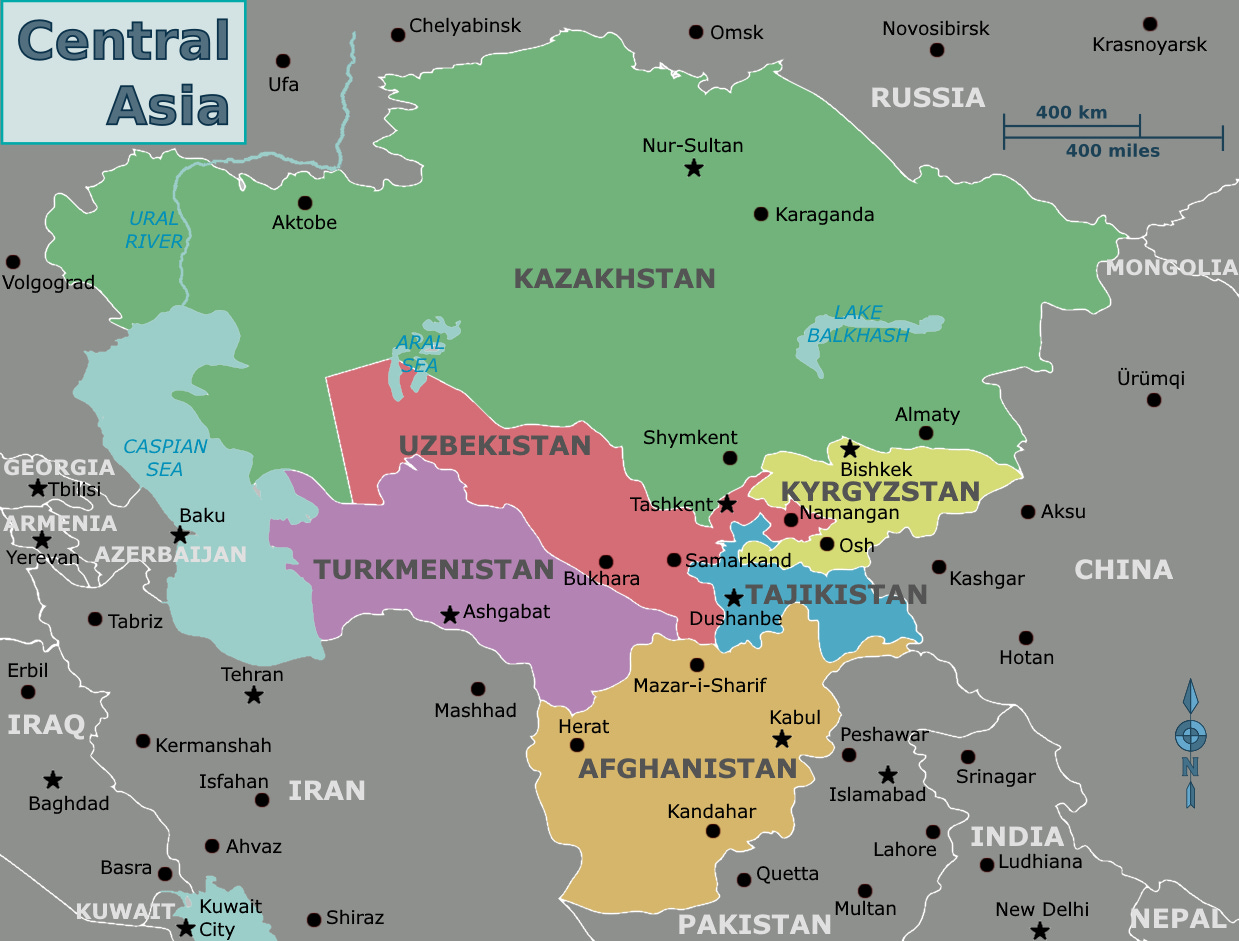
Central Asia, unlike the Caucasus, will be a much more difficult region to engage with, purely because of its sheltered geography and distance from Europe and any other Western allies. Given this, it is likely that Moscow and Beijing will remain the most prominent players in the region. However, there are key actions and relationships that can be cultivated which would derive strategic advantage for the West. While diplomatic efforts will matter, there is a greater role in this region for military and intelligence engagement.
One of the principal factors the West should exploit is the threat posed by terrorist groups in the region. The return of the Taliban to power in Afghanistan has produced a number of border clashes between them and their neighbours, with notable incidents involving Pakistan and Iran. When the Kabul government fell in 2021, Russia reinforced its military presence along the borders of Central Asian states. This was despite reports at the time of GRU links to arms flows into Afghanistan. If the Taliban attempts a northward assault —as it has to the east and west, how much can Russia be trusted to intervene, given its manpower pressures from the ongoing conflict in Ukraine? As discussed earlier, the CSTO’s ability to act faces a serious credibility gap after its failure to protect Armenia.
Beyond the Taliban itself, threats have emerged from their rise. Actors, such as ISIS-K, operating primarily from Afghanistan, but with reach across the region. Moreover, localised groups, such as the Islamic Movement of Uzbekistan, also present real dangers. Turkey has begun to sell military equipment to several of the border states with Afghanistan alongside training. Further arms sales, joint training and intelligence sharing by other Western powers in the counter-terrorism realm could enable the return of bases in the region that were present during the early years of the war in Afghanistan. These facilities could then be used as springboards for other geostrategic purposes. Key listening posts and the ability to conduct strategic surveillance into Iran and China were lost when coalition forces withdrew from Afghanistan.Expanding partnerships in Central Asia could help reestablish some of these capabilities.
Deepening relations in the region and bringing Turkey further into the Western fold could enable joint intelligence penetration of China’s western borders. While Ankara attempts to hedge its relationship with China, there is significant domestic sympathy in Turkey for the Uyghurs and concern about their persecution, especially among the more nationalist and Islamist constituencies in Erdoğan’s base. If concrete economic steps can be taken so Turkey feels less beholden to Belt and Road investment, this could become a more prominent strand of Turkish foreign policy. During the Cold War, the CIA’s Near East division maintained contacts in Xinjiang linked to Uyghur elements; Turkey could play an instrumental role in assisting in creating an expanded intelligence footprint within China’s borders.
Another key Western interest in the region is Russia’s continued redirection of oil and natural gas eastwards to circumvent sanctions. The pipelines crossing the region toward China are strategically significant.
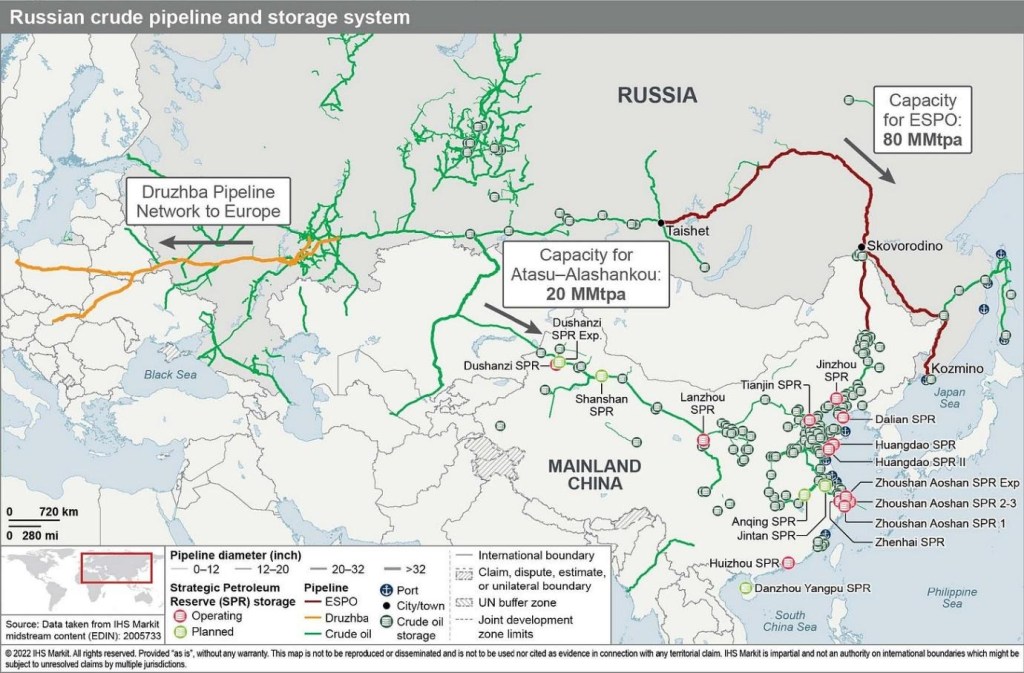
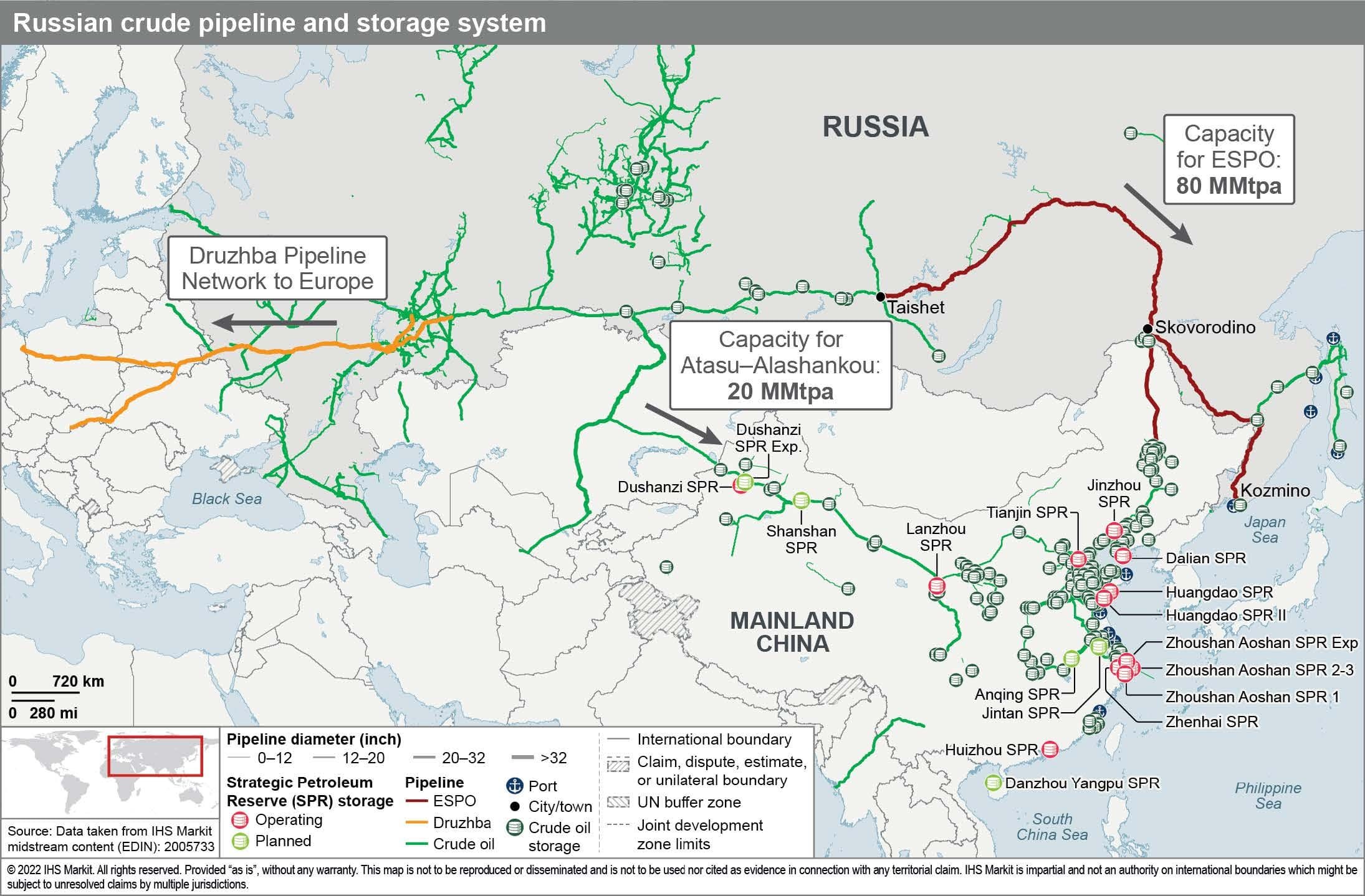
In recent months, Ukraine has attempted to shift the centre of gravity in the conflict away from the front lines by targeting Russian energy infrastructure to cripple Russia’s economy. Debates in the White House over provision of long-range weapons to augment Ukraine’s strike capabilities resemble earlier discussions in the Biden administration about Tomahawk missiles. The provision of such systems should be a starting point, but the West can engage in a much broader grey-zone strategy across regions to support Ukraine’s effort.
The proxy element of the campaign should involve enabling Ukraine to continue its operations. The next step could be an overt one in which NATO increases boardings and seizures of Russia’s shadow fleet and confiscates ships and oil illegally transporting Russian product, especially in NATO territorial waters. France, Estonia and Finland have already conducted initial boardings, but frequency and intensity should be ramped up.
The final element of this strategy returns us to Central Asia. Since the war began, there have been numerous underreported hybrid activities within Europe and Russia, as both sides have engaged in covert action against each other. Russia has allegedly attempted to sabotage Western defence companies and has been linked to assassination plots, such as an attempt on the CEO of Rheinmetall and Wagner-linked arson attacks in the UK. Reporting has also suggested that Western special forces, notably from the US, UK and an unspecified Eastern European state, have conducted operations inside Russia alongside Ukraine’s SBU. The West should consider expanding such operations into Central Asia as a method of disrupting oil flows. Sabotage operations, both kinetic and cyber, around pipeline infrastructure would be strategically useful; a general atmosphere of uncertainty more things going “bump in the night” could serve to constrain Russia and ideally bring it to the negotiating table with serious intent.
Alongside kinetic measures, there is a role for information operations. Opposition to new pipelines can be stoked by spreading rumours that communities will be displaced, thereby destabilising construction plans. Another tool could be promoting the perception that aligning with Russia or China is an either-or choice rather than a mutually beneficial arrangement. If protests like those in Kazakhstan in 2022 reoccur, Russia may be less able or willing to intervene. In such circumstances regimes might look to Beijing for support, or, if protests produce regime change as seen recently in Nepal and Madagascar, they could turn to Beijing rather than Moscow.
The politics of Russia and China integrating more closely will be difficult to shift, but it is possible to disrupt the practical mechanisms of that integration. Central Asia provides a key conduit for such activity and should therefore be a tool in the Western grand strategic toolbox going forward.
Conclusion
Central Asia and the Caucasus occupy a complex position within the evolving Eurasian balance. While neither region constitutes the primary theatre of Western grand strategy, both are pivotal in shaping the geopolitical environment in which great power competition unfolds. The Caucasus presents the more immediate opportunities: Turkey’s partial re-alignment with the West, Azerbaijan’s estrangement from Moscow, and Armenia’s reassessment of its reliance on Russia together offer the potential for a renewed Western presence along the Black Sea–Caspian corridor. Engagement here can serve as both a stabilising force and a springboard for broader influence across Eurasia.
Central Asia, by contrast, remains geographically remote and politically insulated, yet it represents a critical rear area for both Russia and China. The region’s energy infrastructure, counter-terrorism partnerships and intelligence potential make it an arena in which carefully calibrated military, covert and informational instruments can yield disproportionate strategic dividends. Western engagement should therefore focus less on wholesale transformation and more on selective disruption complicating Russian and Chinese integration while cultivating narrow but valuable partnerships.
In sum, the Rimland remains the decisive battleground of global power, but the Heartland’s periphery is where the tempo and cost of that contest can be shaped. If the West can operate intelligently in these inner theatres blending diplomacy, covert action and economic statecraft it can impose friction on adversaries, reinforce allies and ensure that Eurasia’s “soft underbelly” remains a vulnerability not for the West, but for those who would challenge it.